Word Drift · 4:00:05 · four-hour collection
Who named time? The strange names of days, months, weeks and hours
This four-hour collection joins four Word Drift episodes into one night of listening: the days of the week (sun, moon, Tiw, Woden, Thor, Frigg and Saturn), the months (why September, October, November and December kept old Roman numbers), why the week has seven days, and why the clock says AM and PM (ante meridiem and post meridiem, before and after midday).
Watch on YouTube YouTube title: Strange Names of Time: The Complete Collection (4 Hours) | History for Sleep
The four parts
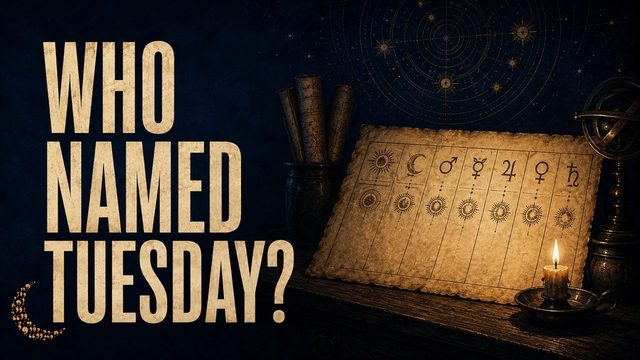 Why do the days of the week have such strange names?
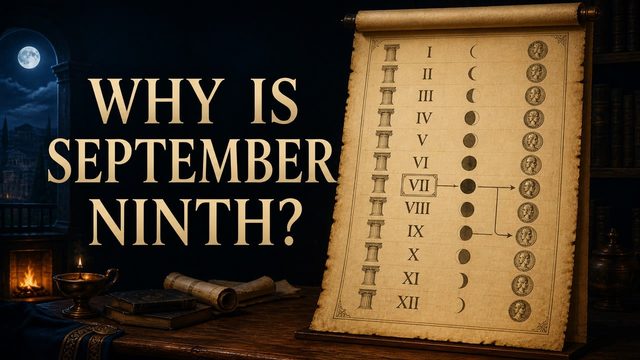 Why is September called the seventh month when it is the ninth?
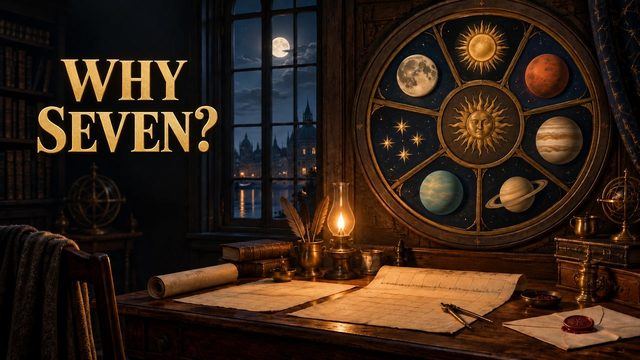 Why does a week have seven days?
 What do AM and PM mean, and why does twelve come twice?
Each part page has its own chapters, questions and full transcript.
Chapters
- Part 1 · Days of the Week: settle in
- Ordinary names, strange histories
- What a week really is
- Seven lights in the sky
- Rome and the planetary week
- Names travel north
- Sunday and Monday
- Tuesday, Tiw's day
- Wednesday, Woden's day
- Thursday, Thor's day
- Friday, Frigg's day
- Saturday, Saturn stays
- Why seven remains
- A shared agreement
- Part 2 · The Months: twelve names on the wall
- January and Janus, the god of doorways
- February, the month of cleansing
- March and Mars
- April and May
- Quintilis and Sextilis become July and August
- September to December: the numbers that moved
- Why February is so short
- Caesar's calendar and the year of confusion
- Other calendars, other months
- Part 3 · Why a Week Has Seven Days
- Moonlight over Mesopotamia
- The Sabbath count
- Why the days come in this order
- Rome's eight-day market week
- Constantine and the day of the Sun
- Bells and the medieval week
- France tries a ten-day week
- Soviet five- and six-day weeks
- How the weekend was born
- Why seven, after all
- Part 4 · AM and PM: two letters beside the bed
- Finding the middle of the day
- Before clocks had equal hours
- Why twelve returns twice
- The Latin hiding on the clock
- Noon moves from town to town
- The clock makes twelve mechanical
- The puzzle of twelve
- Why twenty-four hours did not replace them
- A phrase that survived its language
- The Sun inside two letters
Questions this episode answers
What episodes are in the Strange Names of Time collection?
Days of the Week, The Months (Why September Is Still Called the Seventh), Why Does a Week Have Seven Days?, and Why We Say AM and PM, joined with soft crossfades and the repeated sign-offs removed.
How long is it?
Just over four hours (4:00:05), with 46 chapters so you can find your place.
Can I listen to each part separately?
Yes. Each part is also its own full episode on the Word Drift channel and on this site.